Collage
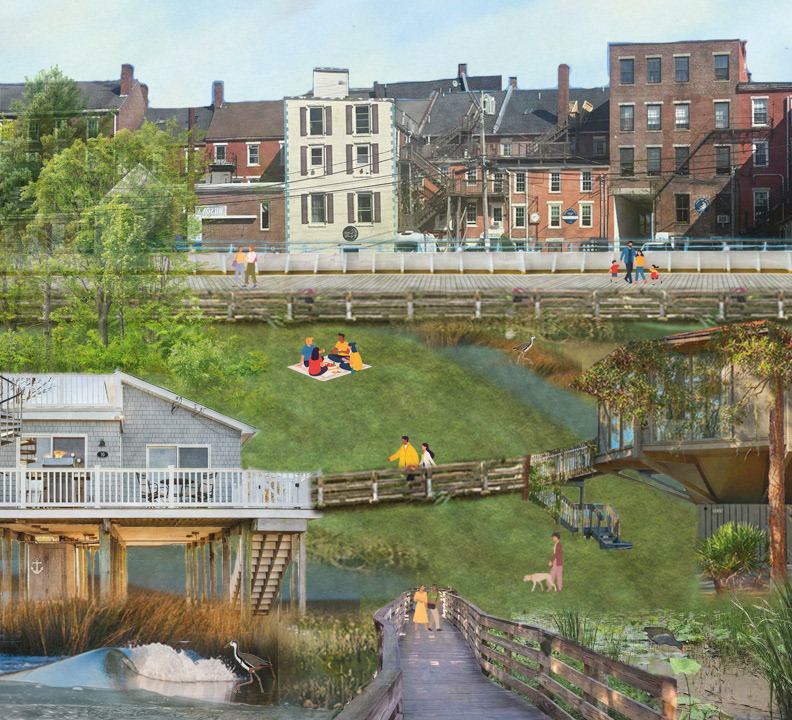
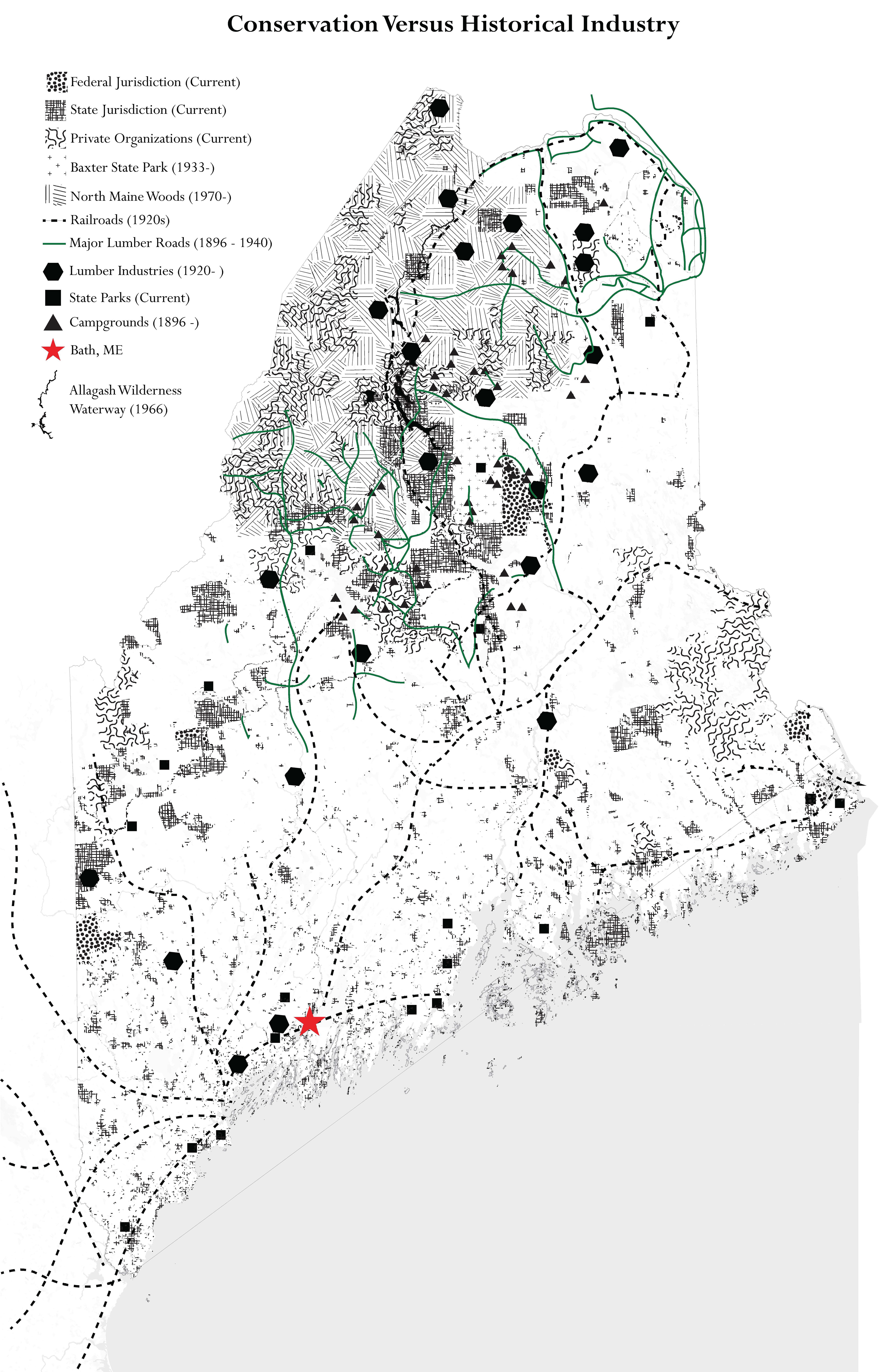
As part of the 2025 Midcoast Maine Envision Resilience Challenge, this studio worked to build resilience in Maine from the scale of the forest to the scale of the dwelling. We began by studying the forests in Maine, looking at the forests’ history, ecology, and economy. From here we studied the city of Bath, Maine, working to create a master plan which built, climate, social, economic, and ecological resilience. Lastly, each student chose one of the sites in the master plan and designed affordable housing made of mass timber with strategies to build resilience in Bath, Maine.
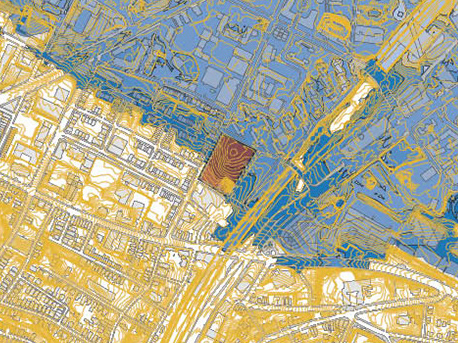
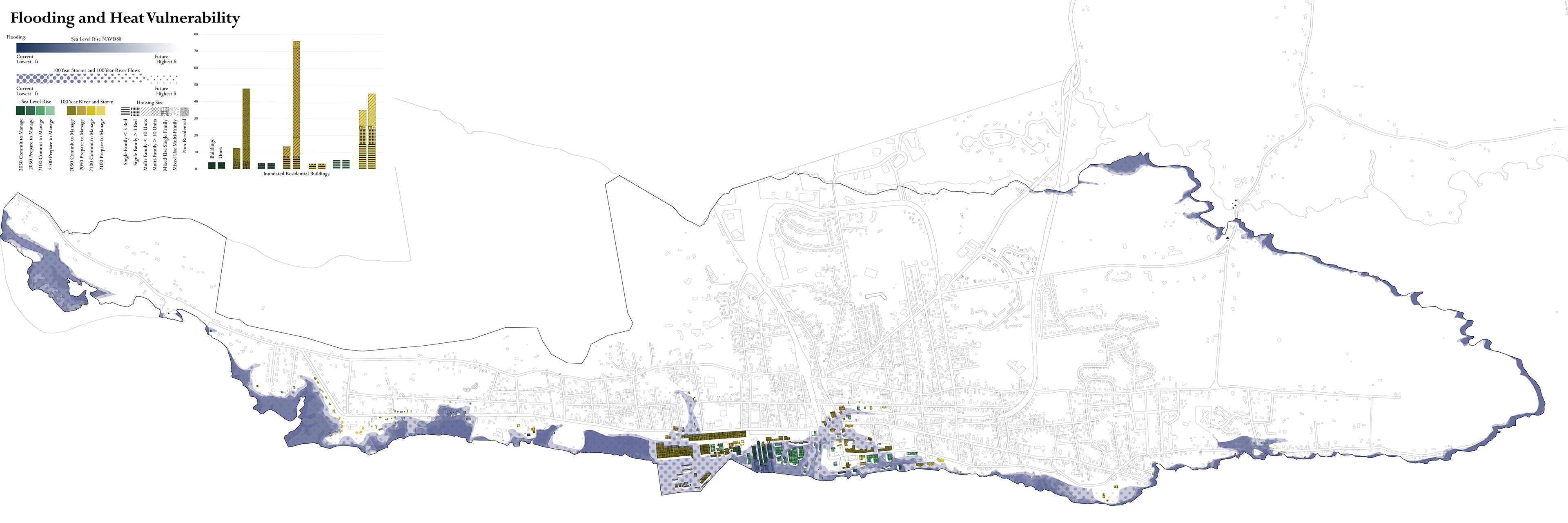
Bath, Maine sits along the Kennebec River and is extremely vulnerable to flooding. The Bath Vulnerability Assessment lists 15 scenarios for sea level rise and flooding. This map shows 10 of these scenarios, ranging from current sea level and 100 year storm and river event flooding to 2100 worst case scenario sea level rise and 100 year storm and river event flooding. I estimated about 20.3% of the buildable parcel area and 80 residential buildings, a total of 194 housing units within our scope, could be affected by flooding.
My chosen site, a municipal parking lot in Downtown Bath, currently experiences flooding during 100 year storm events. The topography of the site creates a basin between two hills, a natural place for water to gather. As sea levels rise, this site will become more and more inundated. In a 2050 scenario with the minimum sea level rise, the site could be inundated 2.2ft. In the most conservative model for 2100, the site would be inundated 6.2 ft at high tide each day, and face 10.3ft of inundation during 100 year storm events.
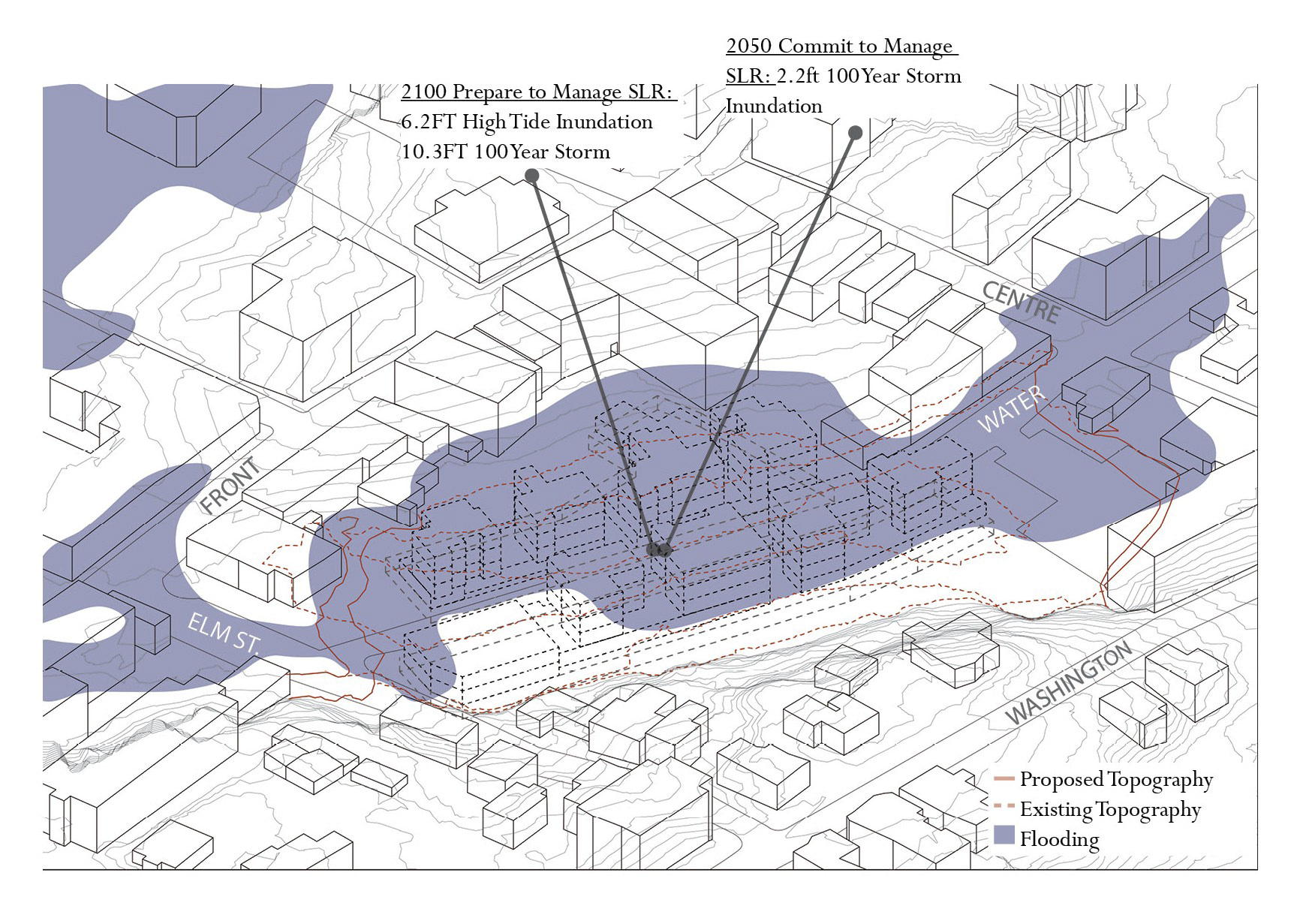
Topography and Flooding
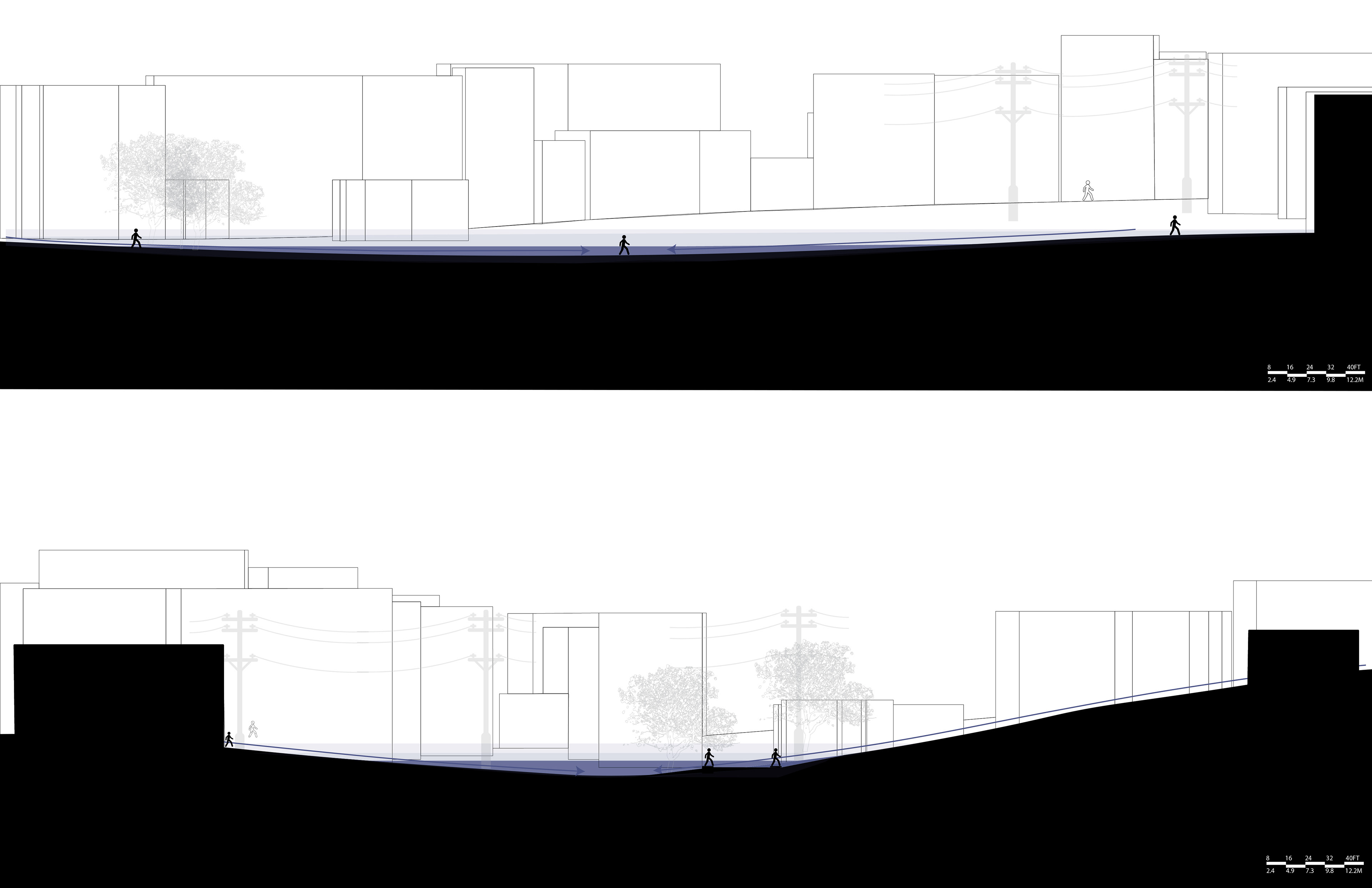
Proposed Topography
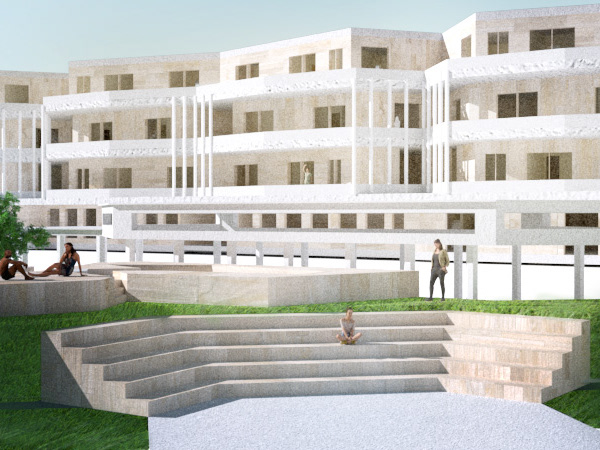
To build resilience against flooding, I proposed raising Water Street 6ft, infilling the site to level out the existing basin. I added new green space, residential green courtyards, and green roofs to give rainwater a place to go. Additionally, I proposed raising and rebuilding the police station currently located on the site. The police station is at risk for flooding in the future and installing a green roof on top of the police station works to collect rainwater and reduce the heat island effect in downtown Bath.
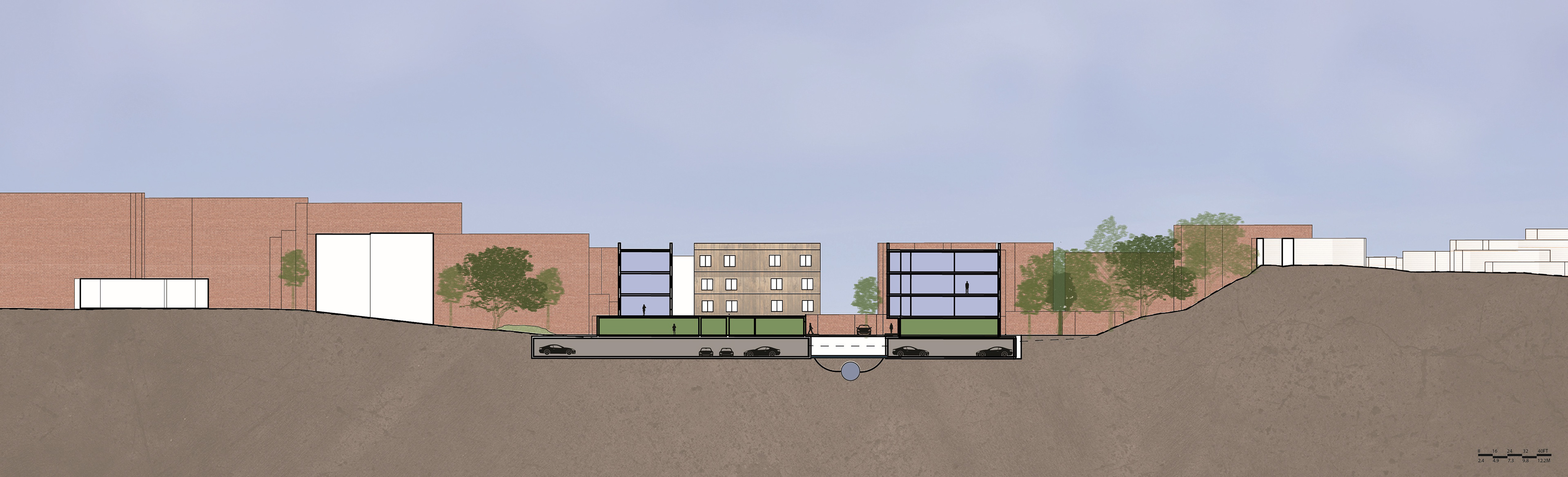
Section AA
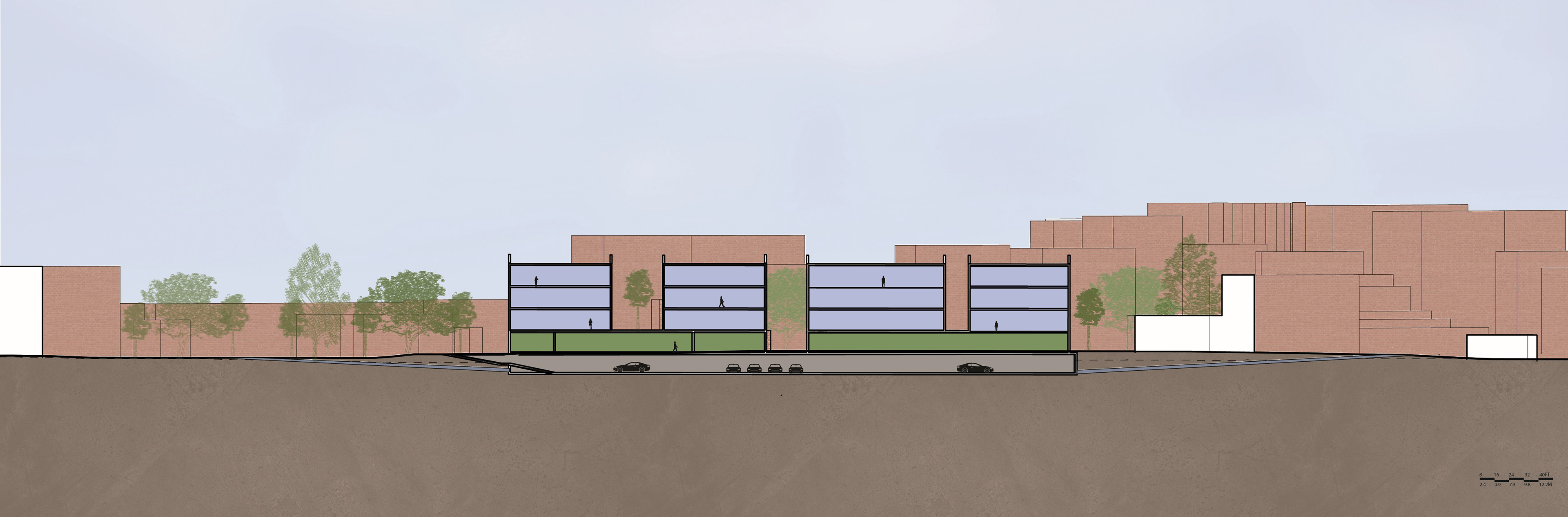
Section BB
Bath, ME is home to Bath Iron Works, a company that builds ships for the Navy. Most of BIW’s workforce commutes into Bath, funding many surface parking lots throughout Bath. In this project, I created underground parking that maintains the existing parking capacity on the site. During times of flooding, water can funnel under the raised street or through moments of daylighting and into the underground parking, where it can be held until the city’s main storm drain can process it.
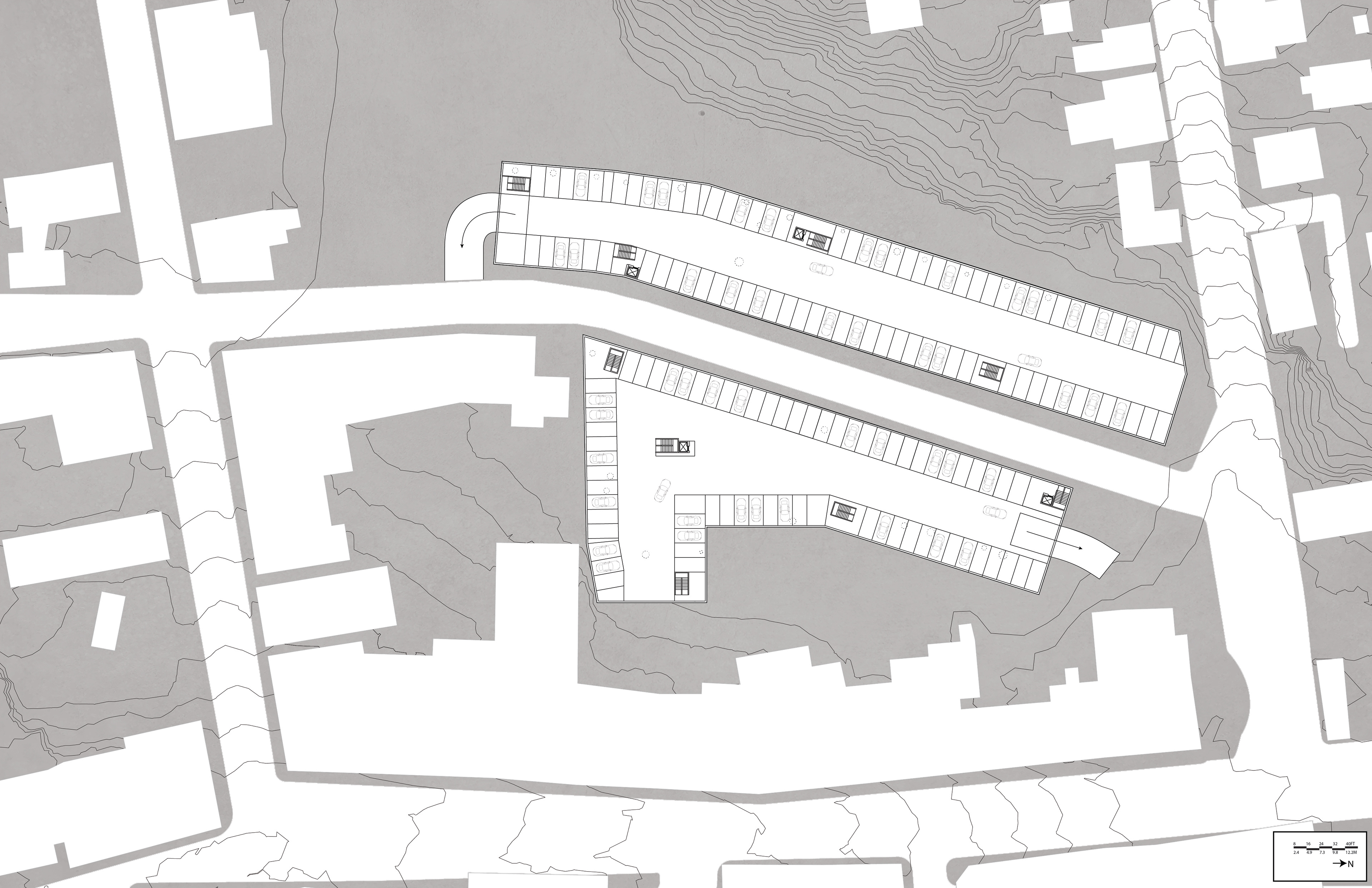
Parking Plan
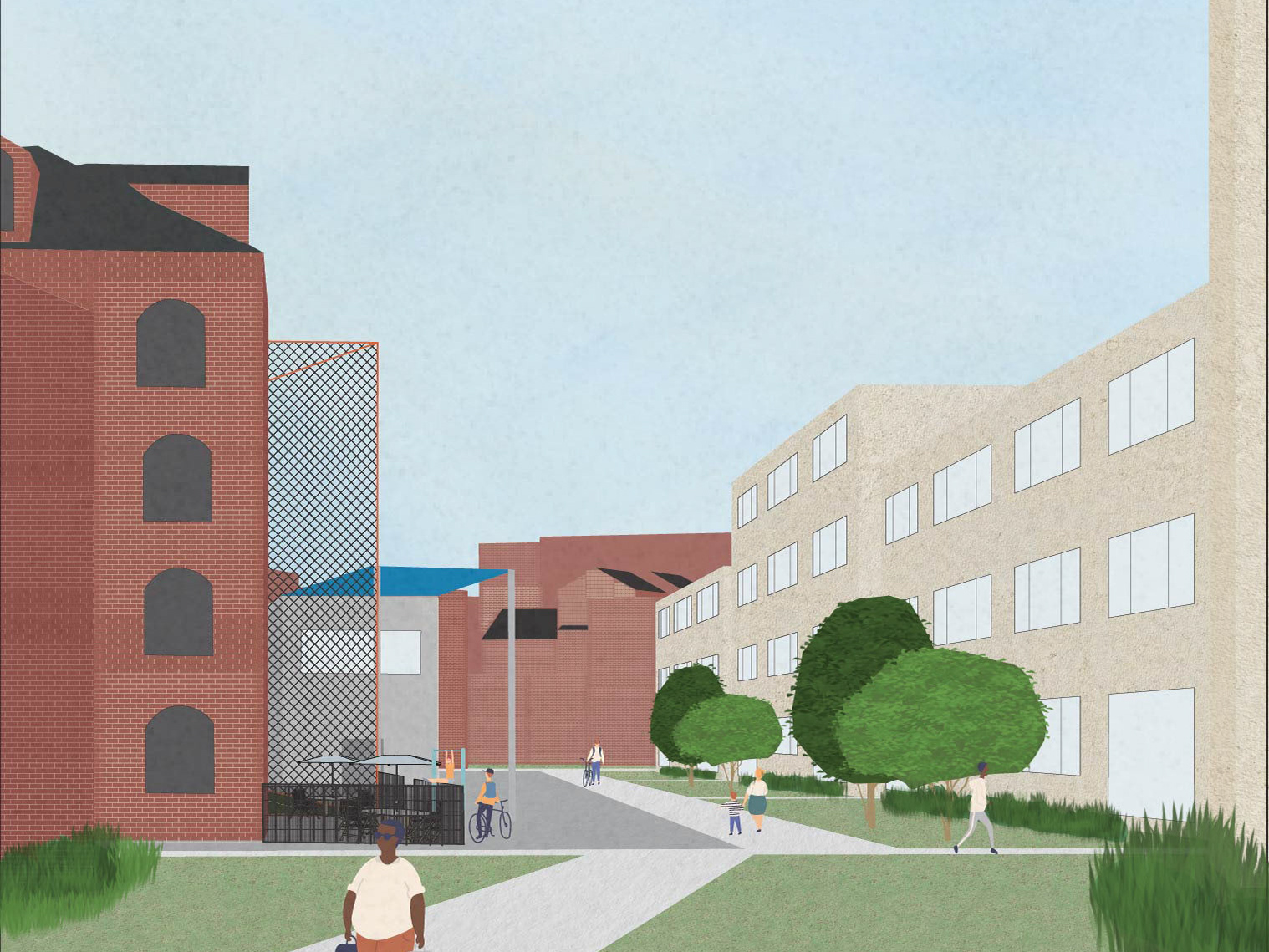
I prioritized maintaining connections and drawing people to the site from Front Street, the main street in Bath’s Downtown. I designed a slow street, with surface level parking spaces situated between berms, to invite people to meander through the site and engage with the back facades of the existing and proposed ground level commercial spaces.
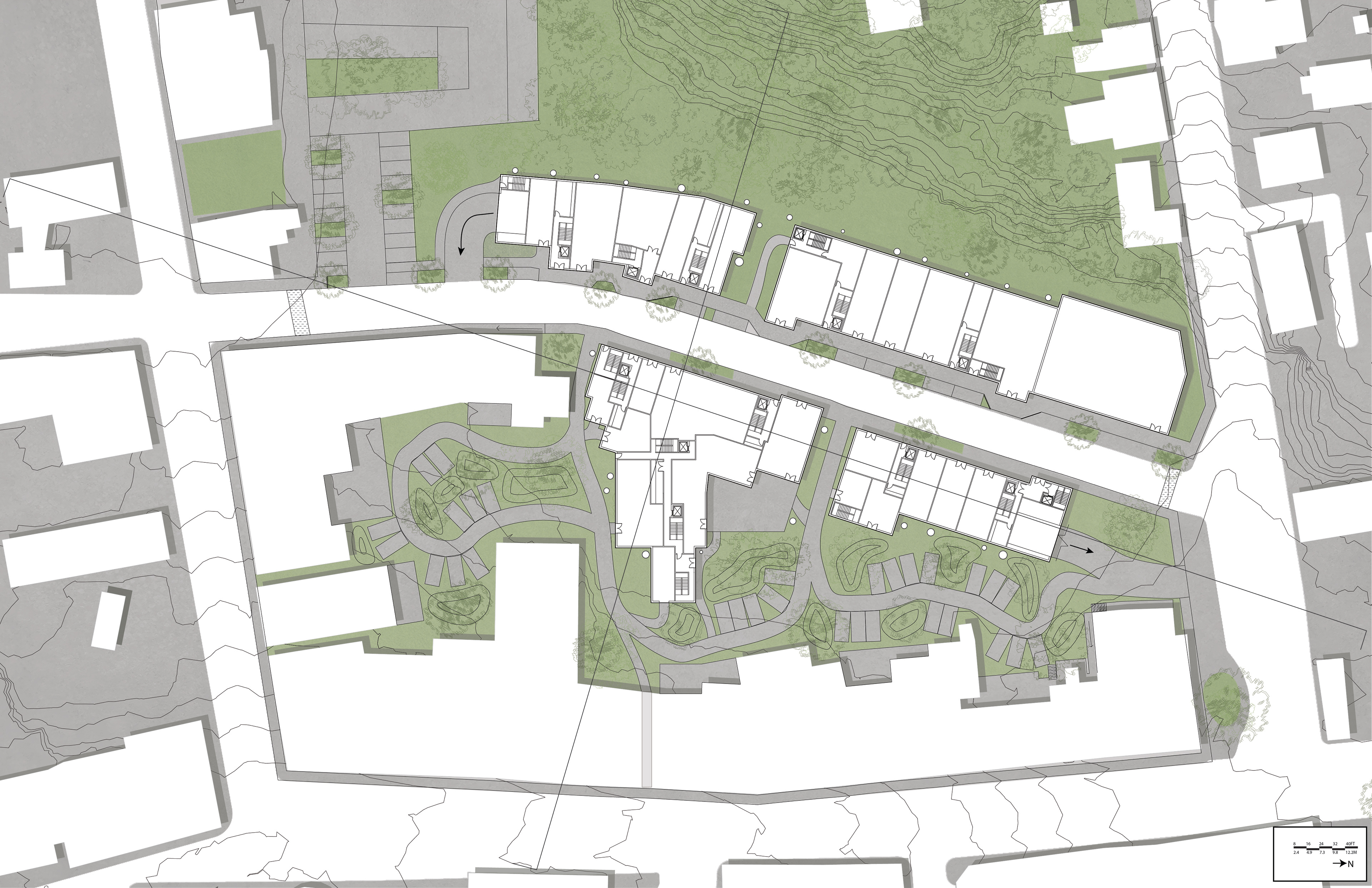
Site Plan
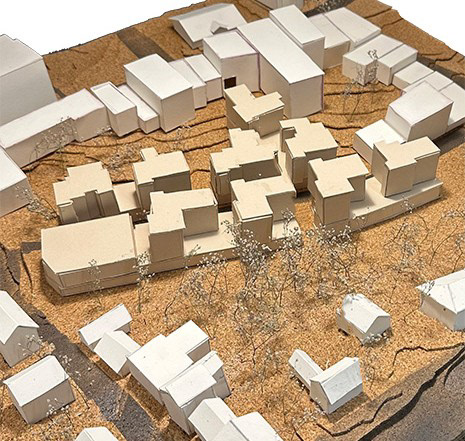
The upper three floors of the building are made of mass timber modular units. The units vary in size, from a studio to a three bedroom. Each conglomerate of units contains a mix of unit sizes across each floor. The housing is point loaded to reduce circulation space. The units are arranged to ensure that each unit gets proper daylighting and cross ventilation. The units surround courtyards with green infrastructure, creating an additional amenity for residents. The units also have access to laundry spaces attached to the stair corridor on each ground floor.
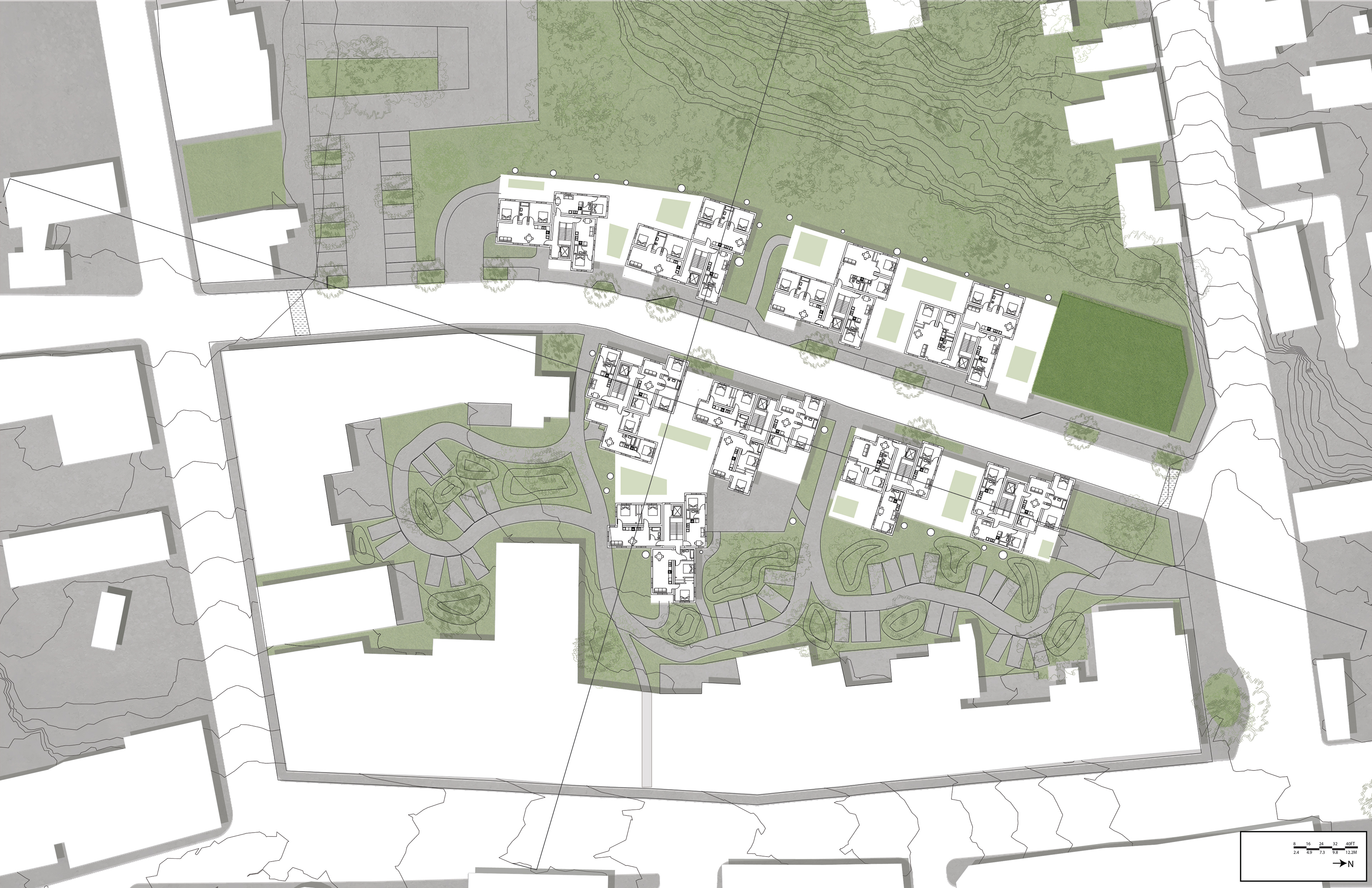
Typical Floor Plan
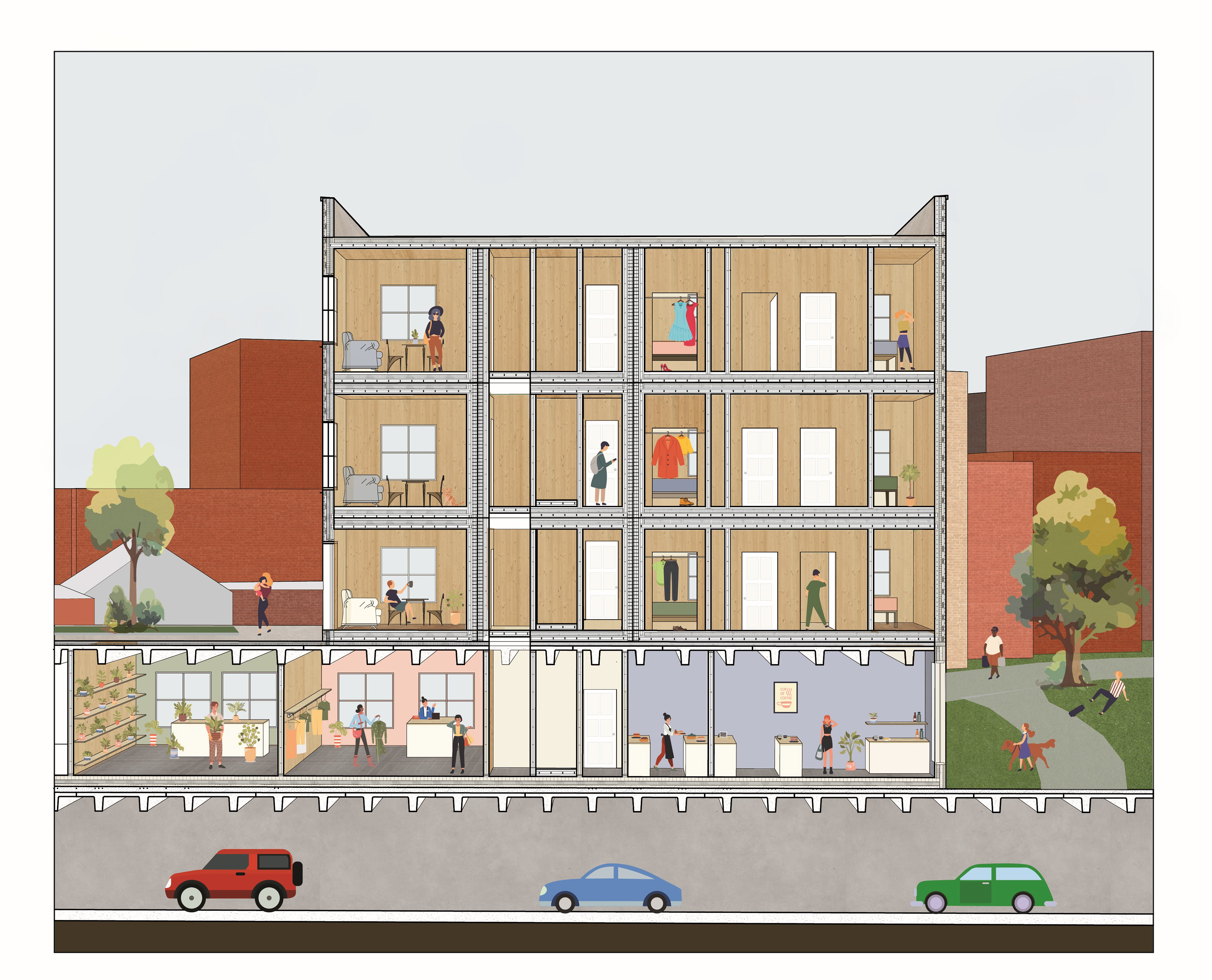
Section Perspective
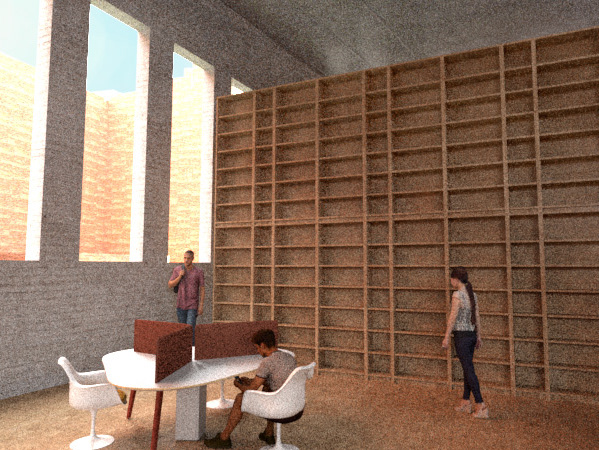
A focus on prefabricated construction systems increases construction speed and allows us to create more affordable units of varying sizes. The building is constructed out of recast concrete double tees and modular mass timber. I chose to use precast concrete on the parking and commercial floor in anticipation of future flooding and to accommodate the water caught by the green roofs. Using modular mass timber, with exposed CLT interior walls, timber board insulation, and shiplap wooden cladding, we can improve affordability while promoting the green economy in Maine.
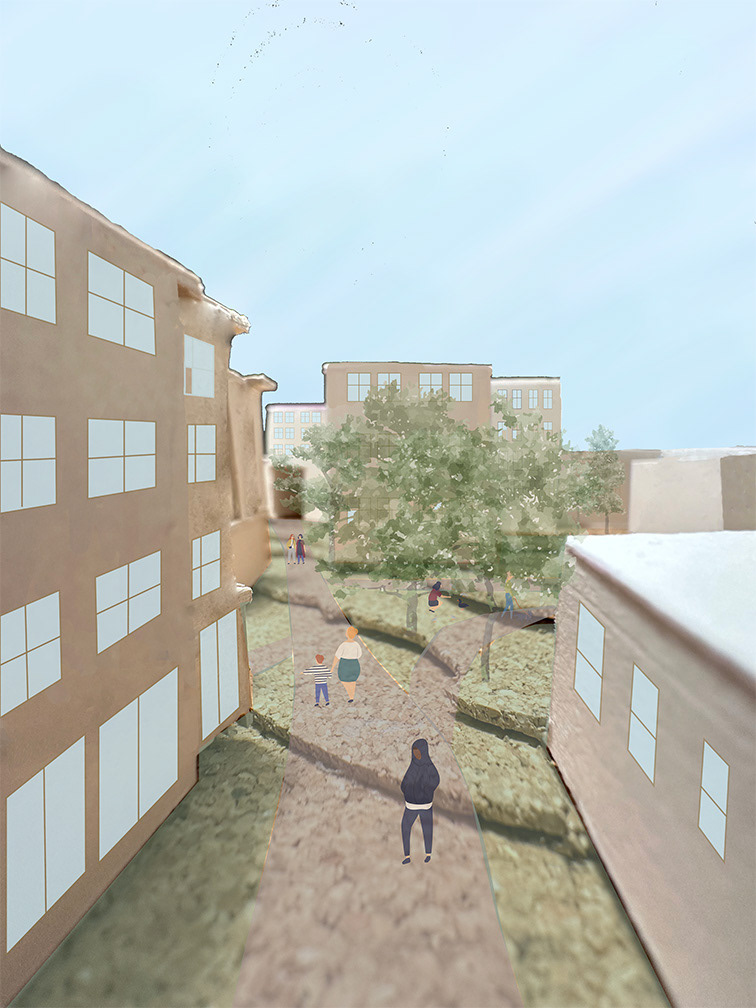
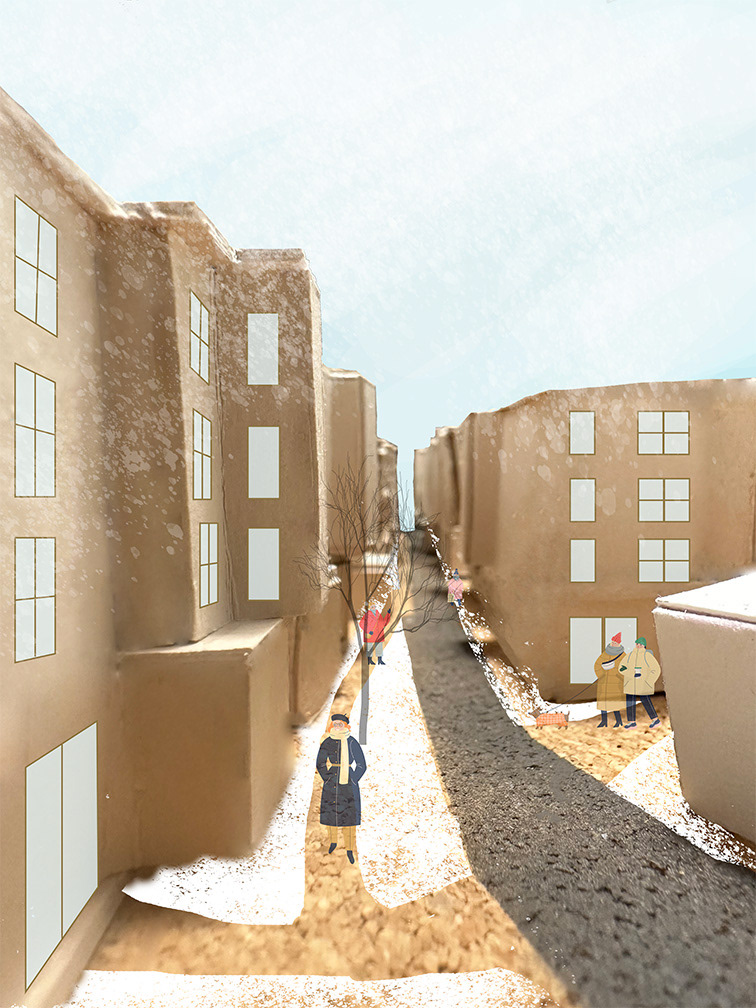
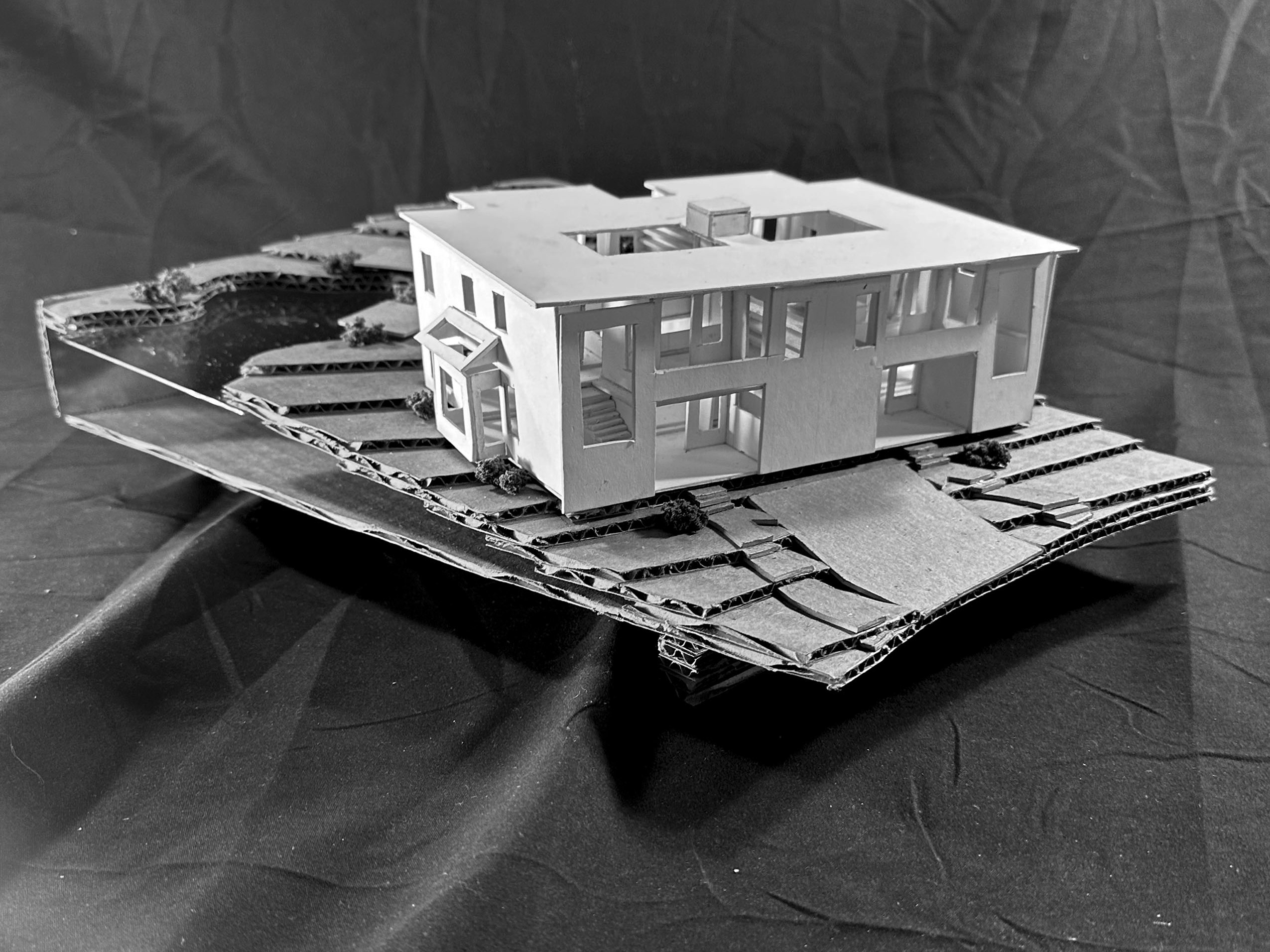
Model